
Losing the Human Touch: Why Aging Consumers Need More from Retailers, Not Less


One-third of adults over 45 report feeling lonely. Nearly one in four adults over 65 are socially isolated. In 2020, about 35% of U.S. households included someone over 65. A third of those, 14.3 million households, were single-person.
These are not statistics about a fringe group. These are your consumers.
And the world they navigate every day is becoming less human, not more.
The disappearing social infrastructure
Traditional social structures once provided older adults with a buffer against isolation: extended families, close-knit communities, familiar faces in familiar places. Urbanization, smaller families, and longer lives have changed that.
But something else is changing it faster. The everyday touchpoints where older consumers used to have human contact are being stripped away in the name of efficiency.
Supermarkets are replacing cashiers with self-checkout. Banks are closing branches. Customer service is routed through chatbots and automated phone menus. Post offices, travel agents, local shops — all thinning out or going digital. Each one of these was a small moment of human interaction. A conversation at the till. A familiar face at the counter. A reason to leave the house and be recognized.
For younger consumers, this shift is mostly an inconvenience. For older consumers, especially those living alone, it is the quiet removal of their social world.
The health costs are real
This matters beyond sentiment. Loneliness rewires health.
Physically, it raises the risk of heart disease, stroke, and high blood pressure. It weakens the immune system and contributes to obesity. Cognitively, it accelerates decline and increases dementia risk. Psychologically, it is linked to depression, anxiety, and suicidal ideation.
The overall impact is so severe that researchers equate it to smoking 15 cigarettes a day. Loneliness shortens lives, worsens quality of life, and drives up healthcare costs. This is not a soft issue. It is a public health crisis with hard numbers.

The AI temptation
The technology sector has noticed the problem. AI-powered companions, chatbots designed to simulate conversation and reduce feelings of isolation, are drawing significant research attention.
Some of the findings are striking. De Freitas et al. (2024) found that AI-based conversations can reduce loneliness to levels comparable to those of human interaction. Older adults who used an AI companion reported sustained reductions in loneliness after just a week. What stood out most was that people valued the feeling of being heard. The AI remembered their stories, asked follow-up questions, and offered the kind of attentiveness often missing in daily life.
But a promise does not erase risk. AI can simulate empathy. It cannot replace it. It cannot offer the nuance of shared experience or the comfort of physical presence.
The parallels with social media are instructive. Platforms designed to connect people often left users feeling lonelier. The danger with AI companions is the same: substitution dressed as support. Given the shortage of healthcare personnel in aging societies, there is a real risk that AI drifts from augmenting human contact to replacing it. And relying on machines for companionship could erode the motivation or ability to maintain human social skills, deepening isolation in the long run.
AI companions may help fill gaps where human contact is genuinely unavailable. But they are a response to a failure, not a solution to it. The question is not whether AI can simulate connection. It is why we are building a world that requires it.

The retailers that get it right
Some retailers have recognized that their relationship with older consumers extends beyond the transaction.
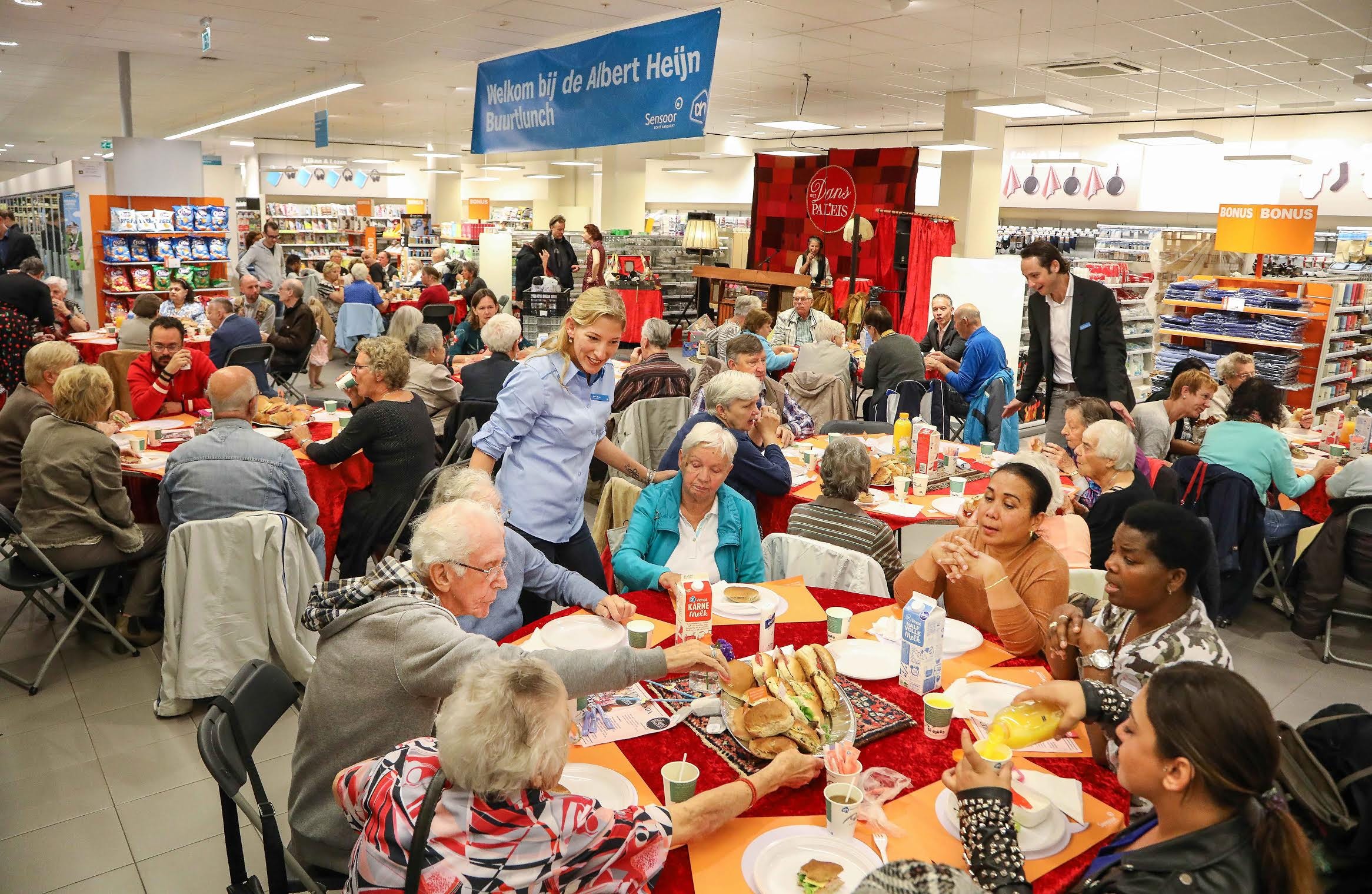
Dutch food retailer Albert Heijn is the clearest example. Beyond groceries, it has hosted Christmas lunches, organized community dinners, and created “mini-restaurants” with dinner vouchers, all aimed at tackling loneliness through real-world contact. The store becomes a social space. The brand becomes part of the community. And the consumer who comes for lunch comes back to shop.
This is not charity. It is a commercial strategy built on a simple insight: for older consumers, especially those living alone, a brand that provides human contact provides something no competitor with a faster self-checkout can match.
The opportunity is not limited to retail. Any business with a physical presence, a service interaction, or a customer relationship has the same option: invest in human contact and build the kind of loyalty that efficiency-driven competitors cannot replicate.
The obvious objection
Retailers will argue that automation exists for a reason. Staff is expensive and hard to find. Self-checkouts reduce the cost per transaction. Chatbots handle volume that human teams cannot. If older consumers spend less per visit than younger families, why should we invest in serving them more personally?
The argument is understandable. It is also incomplete.
Older consumers may spend less per trip, but they shop more frequently. They are often the most regular visitors a store has. And in a market where private labels are growing, and switching costs are low, the retailer who provides a reason to come back beyond price has an advantage that no efficiency gain can replicate. A community dinner costs less than a loyalty program. A staffed checkout lane is cheaper than winning back a customer who left.
Albert Heijn’s model is not expensive. It is Christmas lunches and dinner vouchers, not permanent headcount increases. The investment is modest. What it builds, a store that older consumers think of as theirs, is not.
The question is not whether retailers can afford to invest in human contact. It is whether they can afford to keep removing it.
What retailers could ask themselves
How many of your customer touchpoints used to involve a human and no longer do? What did those interactions cost, and what did they build? For your older consumers, what has replaced them?
The aging population is growing. Loneliness among older adults is growing faster. Retailers that respond to this, not with AI chatbots but with real human contact, community programs, and spaces where older consumers feel seen, will build something that discounts and digital convenience cannot touch.
A connected, compassionate aging society will not be built by machines alone. But retailers that understand the value of being human in an increasingly automated world will find themselves closer to their most valuable consumers than any algorithm can get.
Links to the Albert Heijn initiatives:
Nieuws - Albert Heijn - Zoekresultaten (ah.nl)
https://nieuws.ah.nl/honderden-kerstlunches-in-albert-heijn-winkels/
https://www.theguardian.com/technology/article/2024/may/27/could-ai-help-cure-downward-spiral-of-human-loneliness
I agree. Problem is not only the present situation, but the world we want for the future. If we let AI become the favorite friend for lonely seniors, we won’ try any more human solution. And this is not only a situation for elderly. We must define the society we want for our future !