
The Loyalty Myth: Why Brands Misread Older Shoppers


When Albert Heijn quietly discontinued its koekjes met kaneel, Carla, 67, was furious. It was her weekly indulgence, something she had bought for decades. She wrote to customer service, tried three other brands, and even scoured online forums for a substitute. Eventually, she gave up and moved on.
That little moment tells a bigger story.
Marketers often assume older shoppers are unwaveringly loyal once acquired. Get them in the door, and you have got them for life. But as Byron Sharp argued in How Brands Grow, loyalty is routinely overstated. Even long-term customers defect more than managers think. The reality: most shoppers, regardless of age, have repertoires of brands they rotate through.
And yet, when I talk to category and brand managers about older shoppers, I often hear the same refrain: “We’re not too worried about them.” Older consumers are thought to prefer national brands over private labels and remain steadfast once acquired. That belief shifts marketing attention toward younger families, the so-called “fresh opportunities.”
But is this perception accurate? No.
The myth of loyalty
Few studies confirm that older consumers are inherently brand loyal, and most that do focus outside of Consumer Packaged Goods (CPG).
Music is the classic case. Research shows that older adults tend to prefer songs popular in their late teens and twenties. The same pattern shows up in perfumes and cars, where older buyers often stick with legacy names like Peugeot, Renault, or Citroën.
But is that the effect of aging, or simply the emotional imprint of youth?
Why we love the brands of our youth
The answer lies in memory. Our favorite brands in music, cars, or perfumes are not just products. They are anchors in the formative years of late adolescence and early adulthood, when identity, independence, and relationships crystallize.
That first perfume was not just a scent; it was the smell of late nights and first loves. That car was not just a means of transport; it was freedom. Those songs were not background noise; they were the soundtrack of becoming ourselves.
These connections run deep. When older consumers gravitate toward familiar brands, they are not just making practical choices. They are reconnecting with who they were. This is less about aging itself and more about cohort effects: shared experiences and cultural influences that embed certain brands in memory and keep them there.
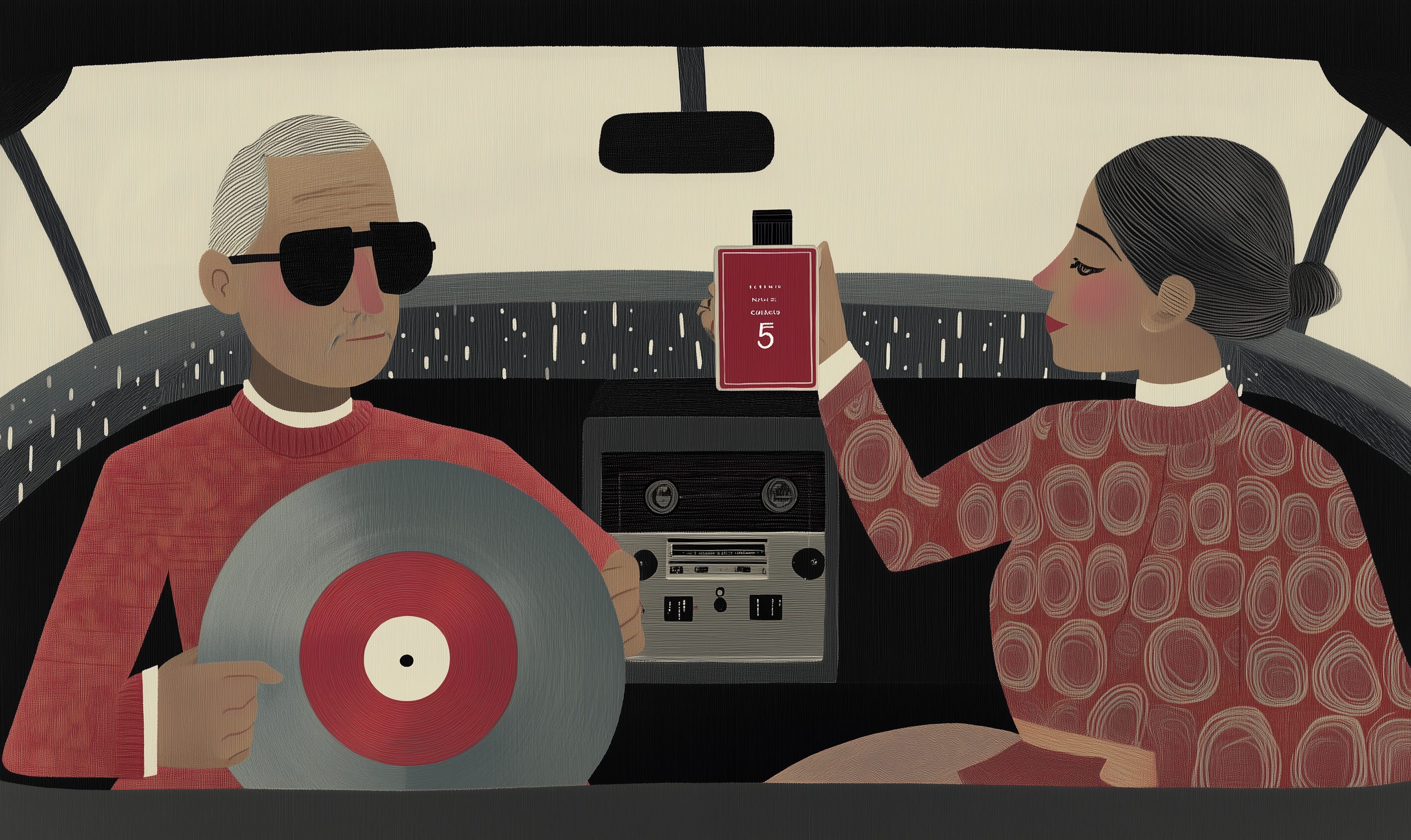
Does nostalgia drive CPG choices?
So how does emotional attachment play out in the world of CPG? Nostalgia is far less powerful here than in categories like music, cars, or perfume. The difference comes down to product turnover.
Music can be revisited on vinyl, CDs, or streaming services. Perfumes and heritage car brands often keep their classics alive. But the supermarket shelf is ruthless: products appear, disappear, reformulate, and rebrand. Many of the items older consumers once loved simply no longer exist, making it impossible to recreate the same nostalgic bond.
Phua et al. (2020) and Uncles & Lee (2006) found little difference in brand preferences between younger and older consumers in CPG. For brand managers, this is encouraging: older shoppers are not locked into the products of their youth. They are just as open as younger consumers to trying something new, provided they’re exposed to it. In CPG, visibility and reach matter more than nostalgia.
Older shoppers are not set in their ways. In CPG, their purchasing patterns look remarkably similar to everyone else's.
And that insight matters. Too often, older consumers are written off under the assumption of fixed loyalty, while marketing budgets chase supposedly "more flexible" younger audiences. Sharp's (2010) work reminds us why that is a mistake: growth comes from reaching as many buyers as possible, not just targeting supposed loyalists. The same applies here. By engaging older consumers alongside younger ones, through broad, inclusive campaigns, brands can reach a segment they are currently leaving on the table.
Loyalty, but only sometimes
Brand loyalty among older consumers is real, but it is not universal. Where products carry strong emotional or identity weight, attachment runs deep. The car someone drove in their twenties, the perfume they wore on first dates, or the band that defined their youth. These are not just purchases; they are markers of self. It is no surprise that loyalty in these categories can last a lifetime.
The mistake comes when marketers assume the same dynamic applies everywhere. In fast-moving, low-stakes categories like CPG, the evidence shows older shoppers are just as exploratory as everyone else. What looks like “loyalty” in one domain does not automatically translate into another.
The real question for marketers is not “Are older consumers loyal?” but “Which categories reward loyalty, and which reward reach?”
What this means in practice
If your brand is in CPG and your team assumes older consumers are already locked in, check your panel data. Look at switching rates, repertoire sizes, and penetration among over-45s. The research is clear: older consumers switch, experiment, and compare just as much as younger ones. They are not locked in. They never were.
That assumption of automatic loyalty is not just wrong. It is expensive. It justifies under-investing in a large, growing segment on the basis of a stereotype that the evidence does not support. Brands that treat older shoppers as already won are not protecting a base. They are ignoring one.