
The Market Brands Keep Ignoring

A few years ago, a marketer told me something I have never forgotten. When I asked about targeting older consumers, she put it bluntly: “I would not target older consumers because they will die anyway.”
That statement is as shortsighted as it is offensive. Older adults today live longer, healthier lives than previous generations. They control substantial disposable income. And they are growing as a share of the population faster than any other segment.
Yet the attitude behind that shrug is more common than most marketers would admit. Youth culture dominates pitch decks, strategy sessions, and creative briefs. Brand managers, many of them young themselves, naturally gravitate toward audiences that feel familiar. They understand the codes of their peers better than those of people decades older. The result: a demographic with more wealth, more stability, and rising influence gets treated as an afterthought.
That is not a blind spot. It is a strategic misstep.
The numbers behind the dismissal
The spending data makes the case plainly.
In the United States, consumers over 65 already account for 22% of all consumer spending, more than $2.1 trillion annually (U.S. Bureau of Labor Statistics). In the EU, the picture is sharper still: over 43% of consumer spending in 2020, worth €1.7 trillion, came from households headed by someone over 65 (Eurostat).
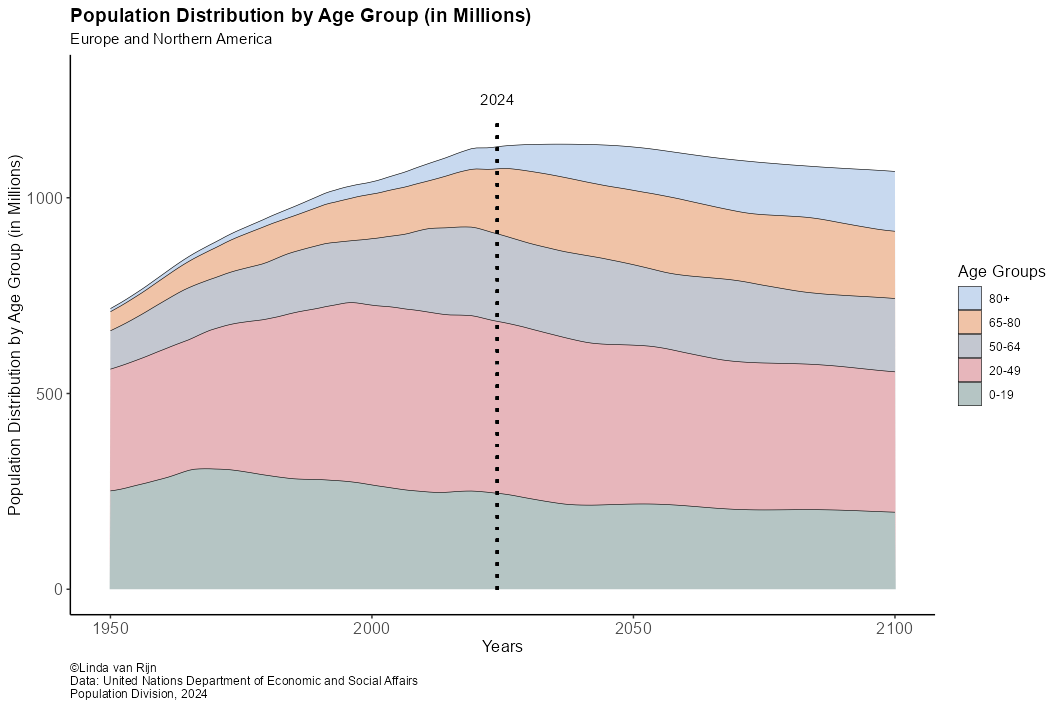
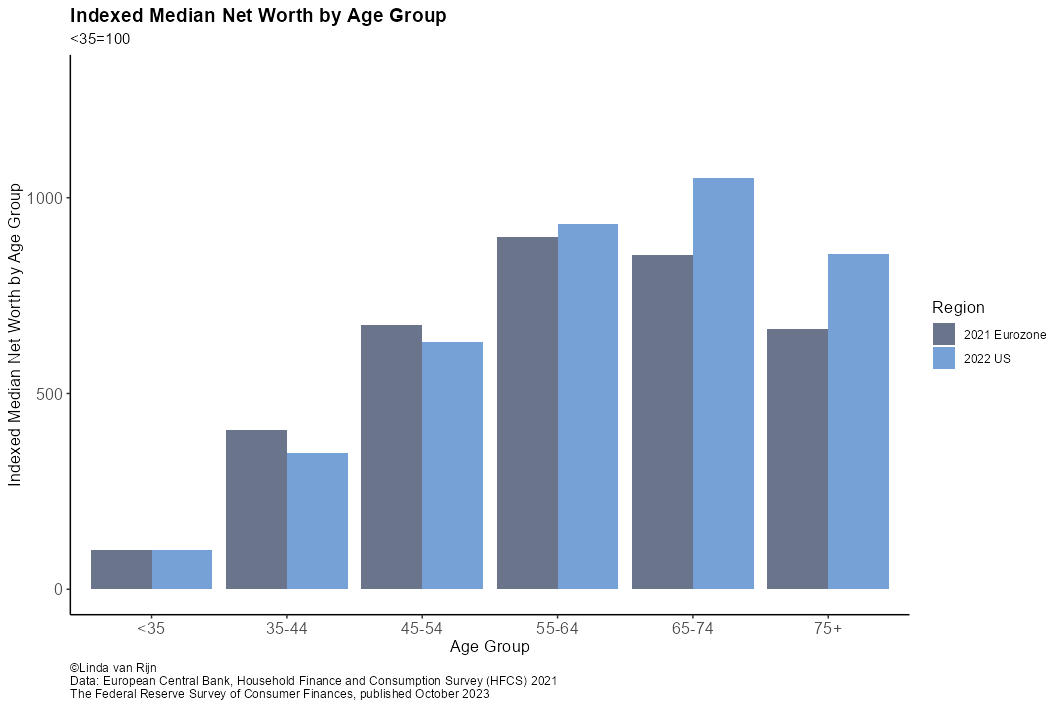
In North America and Europe, 24% of the population will be over 65 within the next decade, making older consumers one of the fastest-growing segments. Median net worth rises with age, with older groups holding substantially more wealth than younger ones. And Eurostat data shows that purchasing power remains more consistent across age groups than most marketers assume. The “spending falls off a cliff” story is convenient. It is not well supported.
These numbers are rising. Yet many brand managers continue to direct their focus toward younger consumers.
Why Brands Default to Youth
Part of the bias is personal. Young brand managers target what they know. But another driver is the persistent myth that older consumers are not worth the investment because they will not be customers for long.
That myth does not survive contact with the data. Life expectancy has increased. Healthy years have increased faster. A 65-year-old today may have two decades of active consumer life ahead. Writing them off as short-term is not hard-headed strategy. It is lazy arithmetic.
And overlooking them is not a neutral choice. It is a decision to walk away from revenue.
What older consumers are actually worth
GfK’s FutureBuy study (2016) found that older shoppers are increasingly adopting technology, undermining the stereotype that they are digitally disconnected. Many are willing to pay more for high-quality products, particularly those linked to health. And while they are not inherently loyal (as the research on CPG switching shows), they tend to operate within tighter repertoires, where effort and error costs make predictability a design outcome rather than a personality trait.
For brands seeking long-term relationships and reliable revenue, that stability is not a drawback. It is an advantage.
Where the opportunity is clearest: food
Few industries are better positioned to benefit from this demographic shift than food.
Older consumers are looking for products that support aging bodies, such as foods rich in protein, fiber, or heart-healthy ingredients. They want convenience that respects their reality: packaging that is easy to open, portion-controlled meals, ready-to-eat solutions that do not feel like concessions. And they respond to familiarity, with classic flavors or reintroduced products connecting with existing routines rather than demanding new ones.
These are not niche preferences. They describe a large and growing share of the market. And yet, walk through any supermarket and count how many products are designed with a 65-year-old in mind. The gap between demand and supply is visible on every shelf.

Getting it right
Reaching older consumers comes with its own requirements. Their media habits differ from those of younger audiences, and they are quick to detect condescension. Messaging must be direct, respectful, and never patronizing.
The starting points are practical: conduct research that includes older consumers rather than screening them out, partner with organizations focused on aging to pressure-test assumptions, and combine traditional media with relationship-driven outreach. Done well, these efforts do more than attract older consumers. They can strengthen trust across age groups and improve overall brand clarity.
The real question
The aging population is not a problem to manage. It is a market to serve. Brands that develop strategies for older consumers alongside younger ones will reach an affluent, expanding, and underserved demographic. Brands that continue to ignore them will lose ground to competitors who saw it first.
The evidence is not new. The market is not small. The only question is how long brands will keep looking the other way.
Links:
https://www.federalreserve.gov/releases/z1/dataviz/dfa/distribute/table/#quarter:119;series:Net%20worth;demographic:age;population:all;units:shares
https://www.ecb.europa.eu/stats/ecb_surveys/hfcs/html/index.en.html
https://ec.europa.eu/eurostat/databrowser/view/hbs_exp_t135__custom_12516013/default/table?lang=en
https://www.bls.gov/cex/tables.htm
https://ec.europa.eu/eurostat/databrowser/bookmark/1b4cdeb3-c591-48e5-9ff0-4e44494a7761?lang=en
Congratulation for your newsletter. It's a pleasure to discover a new voice on seniors market.