
The Packaging Failure Nobody Logs

The redesign looked like a win.
The old pack had started to look tired next to the challenger brands. The new version was cleaner on shelf. It used less plastic. The color blocking was stronger. The sustainability story was easier to tell. The pack shots looked good in the sell-in deck.
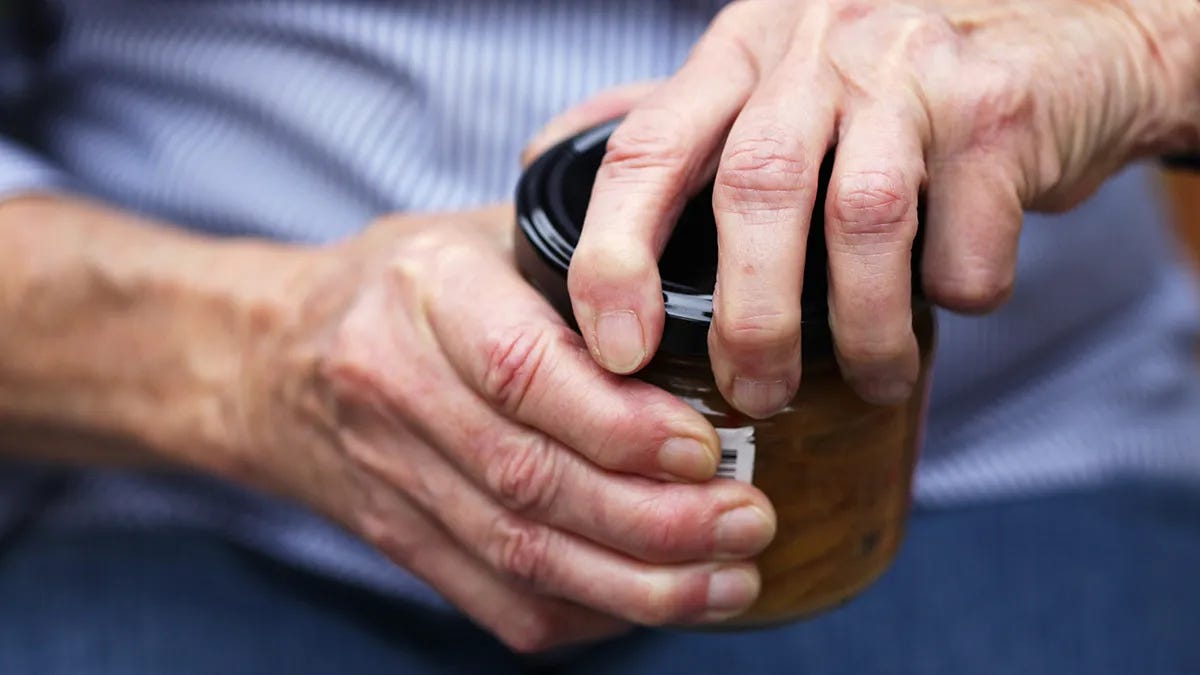
Then the product had to be used by a 72-year-old standing at a kitchen counter.
The new tab was smaller because it looked neater. The label carried more information because every internal stakeholder had won one small battle. The contrast was weaker because premium design still has a strange attachment to pale grey type. The cap sealed better because leakage is easy to count. Nobody tested whether someone with arthritis could open it.
Grip strength is harder to see in a dashboard.
Packaging decisions fail older consumers not at the level of brand strategy, but at the level of fingers, eyesight, joints, wet hands, kitchen lighting, and patience. The commercial cost is measurable. Brands are not measuring it in the right place.
The consumer does not complain. They cut the pack open. They ask someone else. They spill part of the product. They stop buying the format. In the data, that looks like a weak repeat, low loyalty, or price sensitivity.
The problem is simpler. The pack did not fit the consumer.
A DS Smith survey found that 85% of shoppers aged 55 and over needed tools or scissors to open a package, compared with 75% overall. The same survey found that 19% of consumers say difficult packaging has turned them off buying from the same brand again. Those two numbers tell a story that most category reviews never connect: the consumers most likely to struggle with packaging are also the consumers most likely to leave because of it.
A standard already exists. Almost nobody uses it.
Medicine companies were forced to face this more directly than anyone in the consumer goods industry. If a patient cannot open a blister pack, reclose a cap, read the instructions, or dispense the right dose, the product has not reached the user. And some of those products also need to be hard for children to access.
Under US poison-prevention rules, child-resistant packaging must also pass a senior-adult-use test. The test panel only goes up to age 70, which is itself a limitation given that the over-80 population is the fastest-growing demographic. But the principle is right: child safety and adult usability are not separate problems.
CPG faces the same tension. Detergent pods, cleaning concentrates, dishwasher tablets: all need to be difficult for children to open and easy for older adults to use. Most packaging briefs treat those as separate requirements. Medicine treats them as one test.
In 2015, the ISO published one specifically for consumer packaging. ISO 17480 includes a consumer panel method for assessing ease of opening with older adults aged 65 to 80. Panelists are given the pack and only the instructions that would appear on the actual packaging. No demonstration. If the product is meant to be opened without tools, but the panelist asks for one, that counts as a failure.
Senior-friendly is not a mood in a design brief. It is a tested, timed, and observed performance.

When researchers applied this method to 10 single-portion food and beverage packs, seven failed. Five because at least one participant could not open the pack within one minute, and two because satisfaction scores were too low. The standard exists. The protocol is published. Most CPG brands have never run it.
Some brands have already run the test
Kellogg’s changed its portion-controlled cereal from a box format to an easier-open sachet with lower opening force and clearer instructions. The company worked with Arthritis Australia’s Accessible Design Division and Georgia Tech’s Brad Fain. The range became part of Arthritis Australia’s Easy To Open Certified program. The old format made use harder than it needed to be. A better format fixed it.
P&G added tactile markers to Herbal Essences bottles: raised lines for shampoo, raised dots for conditioner, because in the shower, many people do not wear glasses. Ariel SECURECLIC went further, combining child-safe certification with an ergonomic opening system and large, clear instructions at the top of the pack.
None of these is a specialist accessibility project. Each is mainstream packaging that works for a wider range of consumers. The opportunity is not a separate "senior range." It is the ordinary product, working properly.
Pull five products in your range that shoppers over 60 regularly buy. Run a simple test in normal home conditions: kitchen lighting, wet hands, dry hands, no scissors, no help. Ask people aged 70-plus to find the opening point, read the instructions, open the pack, dispense or remove the product, close it again, and put it away.
If someone needs a knife, the pack failed. If someone asks for help, the pack failed. If someone opens it and says they would not buy it again, the pack failed in the only place that matters.
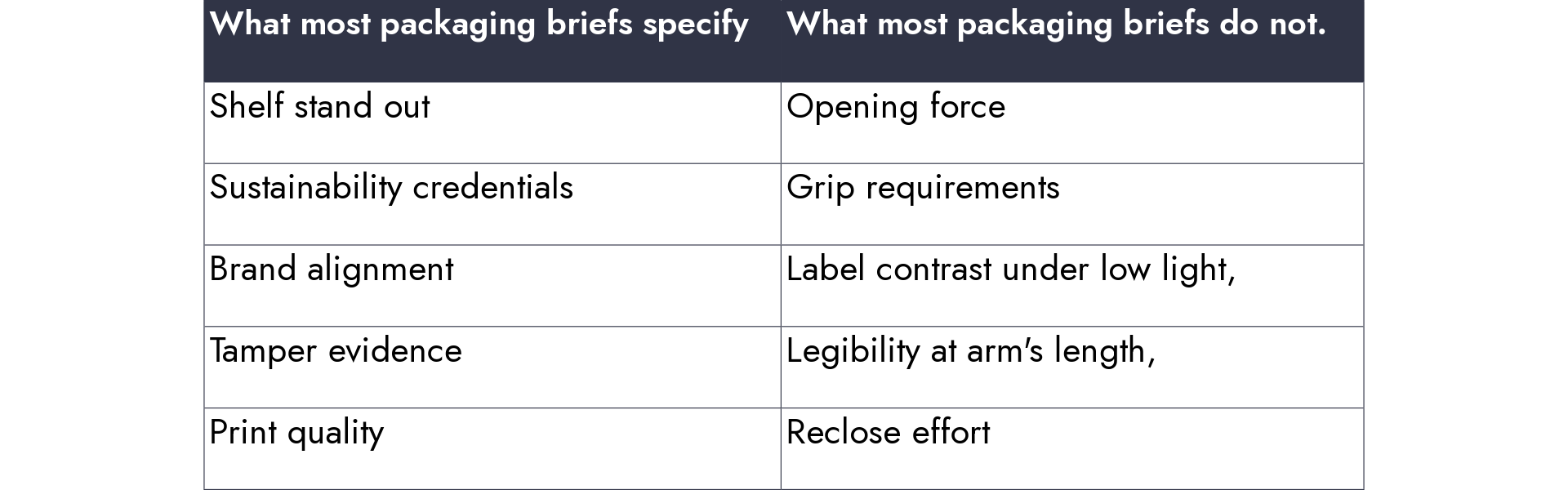
Your packaging brief probably specifies shelf standout, sustainability credentials, and tamper evidence. Check whether it specifies opening force, label contrast, and legibility under low light. If it does not, it is an incomplete brief, and someone downstream is already reaching for a knife.