
When the Supermarket Leaves Town
What disappears isn’t just groceries. It’s health, connection, and the ability to age in place..

On Thursday mornings, Mieke used to walk ten minutes with her trolley cart to the village supermarket. She’d buy groceries, chat with the cashier, maybe bump into a neighbor. Then she’d sit on the bench outside with a coffee from the machine near the entrance.
That was before the store closed.
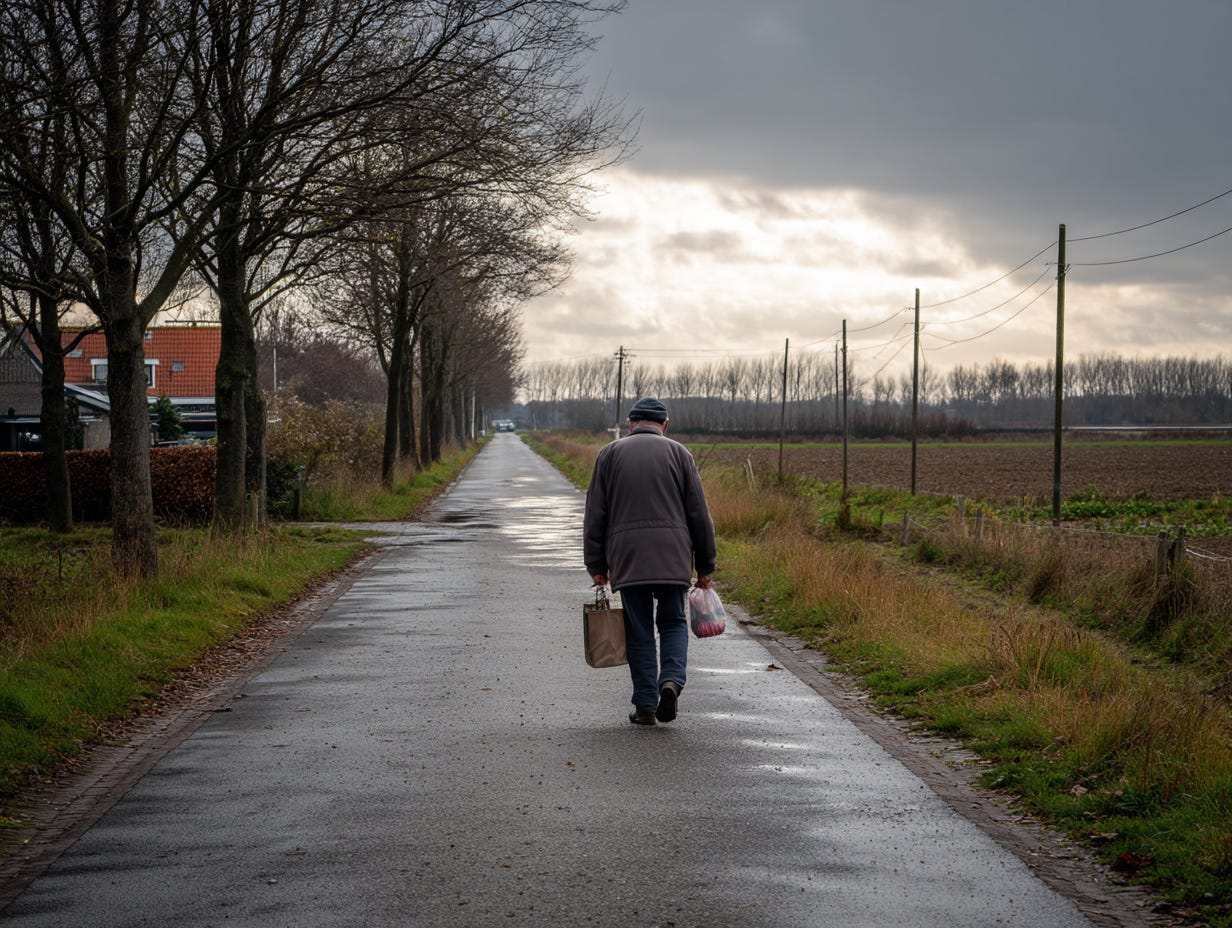
Now her nearest option is seven kilometers away. The bus runs twice a day. She doesn’t drive. Her daughter lives an hour away. So she waits for weekends, hoping someone can take her, or she simply makes do with what’s in the pantry.
She misses the lettuce most of all. And the bench.
Across the Netherlands, village supermarkets like Mieke’s are vanishing, especially in regions with aging populations and shrinking public transport. At first glance, it looks like a logistical inconvenience. But zoom out, and it becomes clear: this is a slow-moving public health crisis. Without nearby shops, older adults struggle to access nutritious food, lose daily social contact, and become more likely to need costly medical care.
And while this story is Dutch, the pattern stretches across aging nations from Germany and Austria to Japan and the United States.
The vanishing point
Between 2008 and 2015, rural residents in the Netherlands saw the distance to their nearest supermarket rise faster than anywhere else in the country. Not by accident. Demographic decline, retail consolidation, and the economics of small-town business all pushed shops to close. New policies, like the recent ban on tobacco sales in supermarkets, are expected to accelerate the trend by cutting already-thin margins.
When a store shutters, what disappears is not just food access. It is the quiet services supermarkets provide: a place to bump into neighbors, buy a newspaper, or ask for help. These stores stitched communities together. Without them, village life frays.
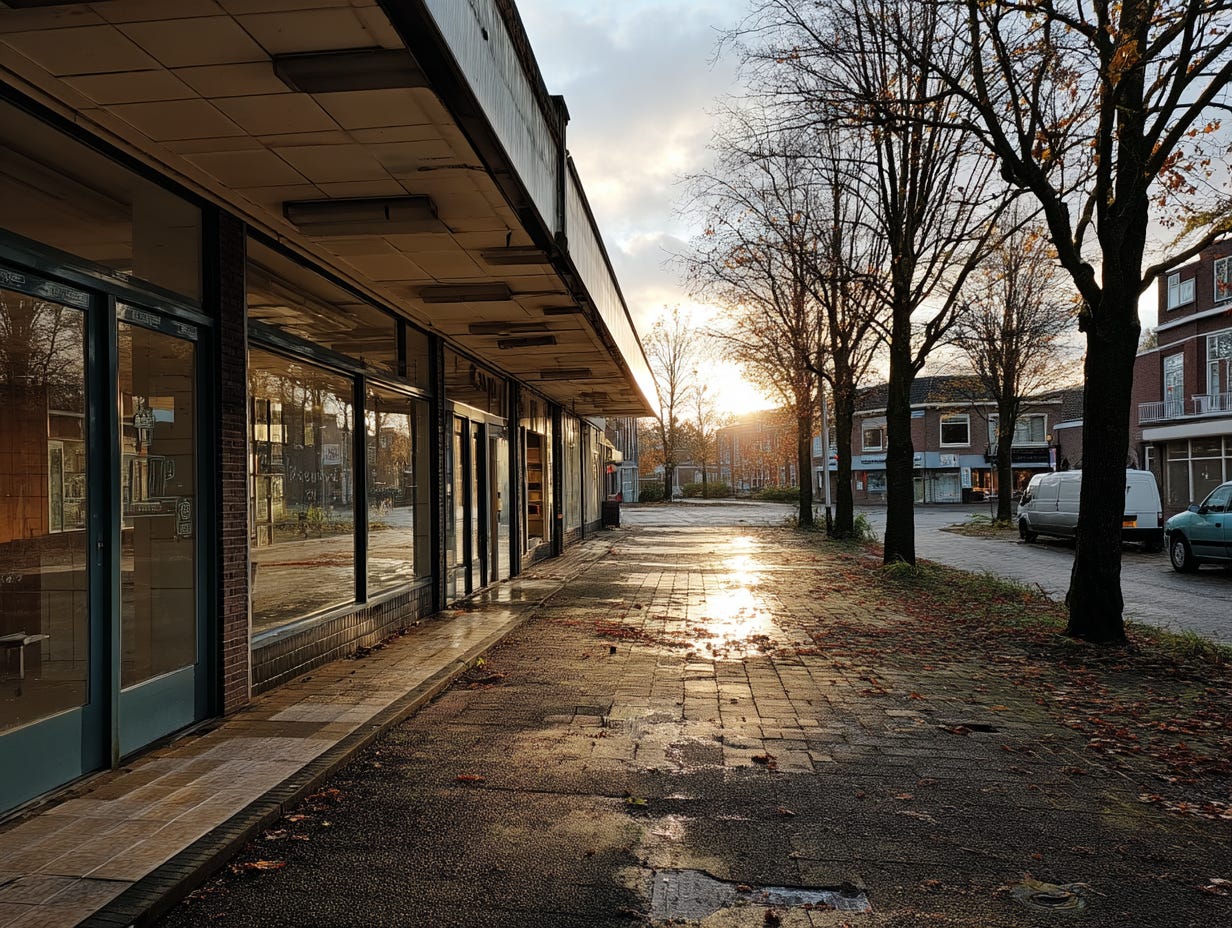
A former supermarket stands empty. For many villages, this is becoming the new normal (source: Midjourney).
Older, slower, and further away
In 1990, just under 13% of Dutch residents were over 65. Today it is over 20%. By 2070, it will be 5.4 million people. The oldest populations are not evenly distributed. They are clustered in rural provinces like Drenthe, Limburg, and Zeeuws-Vlaanderen. Those are also the regions where supermarkets are disappearing fastest.
The overlap is not a coincidence. It is a warning.
Mobility data makes the point clearer: four in ten people aged 75–85 report physical limitations. Among those over 85, it is seven in ten. Meanwhile, bus routes are being cut back. Younger people, along with their cars, are moving to cities. What is left are older residents, often alone, increasingly immobile, and watching their safety nets disappear.
Fresh food, out of reach
The average Dutch household lives 1.5 kilometers from a supermarket. In rural areas, it is often more than five. On paper, that doesn’t sound far. But for an 82-year-old without a car, it is another world.
Distance matters. Studies show that when fresh food access declines, diets shift toward processed, shelf-stable goods. Already, 15% to 30% of older Dutch adults living at home are malnourished. Malnutrition is not abstract. It means weaker immune systems, higher infection risk, faster muscle loss. That translates into more hospital visits, higher healthcare costs, and loss of independence.
E-commerce rarely solves the gap. Digital literacy, delivery fees, and the reality that logistics firms favor cities make online shopping a poor substitute for a nearby store.
Access to fresh produce isn’t a lifestyle perk. It is baseline healthcare.
Isolation by design
Supermarkets are not just food suppliers. They are a social infrastructure. A place to run into neighbors, ask after someone’s health, or simply hear your name spoken out loud.
When a store disappears, so does that casual human contact. And isolation, we know, is toxic. It raises the risk of depression, anxiety, cognitive decline, and premature death. It drives up demand for mental health services and long-term care.
The result? Higher health costs downstream, triggered by the loss of a grocery store upstream.

How a missing store becomes a health expense
In 2019, nearly half of the Netherlands’ €97 billion healthcare budget went to people over 65, a 22% increase since 2015. And the curve is only rising.
The evidence on food access is striking. A U.S. model projected that expanding access to fruits and vegetables could prevent nearly 300,000 cardiovascular events and cut lifetime healthcare costs by $39 billion. Real-world programs echo this: one U.S. study found that people with steady food access spent almost 30% less on healthcare annually than those facing food insecurity.
Keeping rural supermarkets open may be the cheapest healthcare policy no one is talking about.
Local solutions with local hands
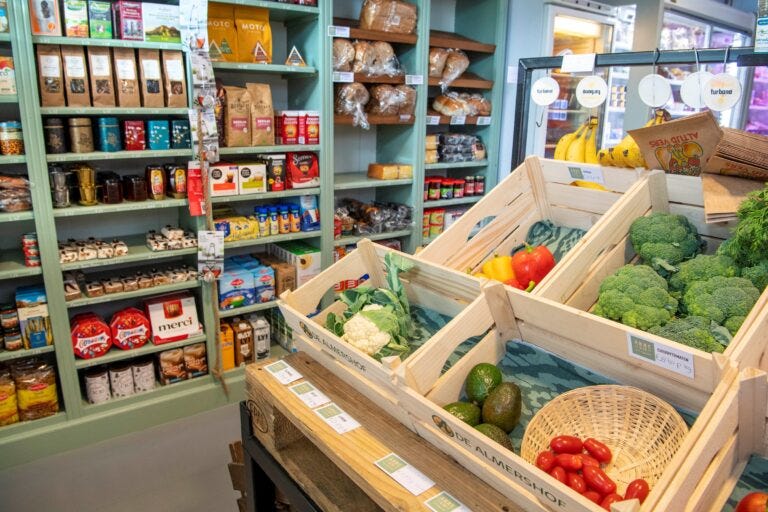
Not every village is giving up. Across the Netherlands, residents have reopened shuttered stores as volunteer-run community supermarkets. They are modest operations, serving 1,000–1,500 people. But they keep shelves stocked and neighbors connected.
These stores prove a point: when food access is treated as a shared responsibility rather than just a business proposition, communities adapt.
What other countries are doing
Japan, further along the aging curve, has transformed its convenience stores into community anchors. Beyond groceries, they offer banking, prescriptions, and even daily check-ins. Today, 99% of older Tokyo residents live within 500 meters of one.
Germany and Austria have taken different routes. Germany invests heavily up front,€100,000–€200,000, to support rural stores. Austria provides smaller recurring subsidies. Both test mobile shops and require feasibility studies before releasing funds.
Different tools, same recognition: supermarkets are critical infrastructure.
What closing a store actually costs
When the last supermarket closes, it is not just groceries that vanish. It is fresh vegetables. It is passing conversations. It is the ability to age in place without a car. What remains are longer drives, quieter villages, and rising healthcare bills.
The fix is not complicated. But it requires reframing supermarkets for what they are: not just retailers, but public health infrastructure. Every store that closes shifts costs from a retail balance sheet to a healthcare budget. The savings are private. The costs are public.
In aging societies, someone will pay for keeping older adults fed, connected, and healthy. The question is whether that happens at the supermarket till or in the hospital ward.